
UPPSC Assistant Architect Planner Recruitment 2026: 8 Vacancies, Eligibility, Salary, Syllabus & Apply Online

The Uttar Pradesh Public Service Commission (UPPSC) has released the official notification for the Assistant Architect Planner Examination 2026 under Advertisement No. A-5/E-1/2026, dated 4 November 2026. The recruitment is being conducted for the Uttar Pradesh Housing and Development Board (UP Awas Evam Vikas Parishad).
This recruitment offers an opportunity for eligible Architecture and Town Planning professionals to join a Uttar Pradesh government organisation in a Group-B, Non-Gazetted position. A total of 8 vacancies have been announced for Assistant Architect Planner, including 5 Unreserved, 1 Scheduled Caste and 2 Other Backward Class vacancies.
Candidates must possess a recognised qualification in Architecture along with the prescribed qualification or experience in Town and Country Planning, Housing or a related field. The advertised pay scale is ₹15,600–₹39,100 with Grade Pay of ₹5,400 (Level 10).
The online application process started on 4 November 2026, and the last date for fee payment and submission of the online application is 4 December 2026. Interested candidates should check the detailed eligibility conditions and examination syllabus before applying.
Govt. Job Updates Portal (Architecture & Planning)
UPPSC Assistant Architect Planner Recruitment 2026: Overview
| Recruitment Details | Information |
|---|---|
| Recruiting Organisation | Uttar Pradesh Public Service Commission (UPPSC) |
| Department | U.P. Housing and Development Board |
| Post Name | Assistant Architect Planner |
| Examination Name | Assistant Architect Planner Examination 2026 |
| Advertisement Number | A-5/E-1/2026 |
| Total Vacancies | 8 |
| Nature of Post | Group-B, Non-Gazetted |
| Recruitment Type | Direct Recruitment |
| Job Location | Uttar Pradesh |
| Educational Qualification | Architecture degree/equivalent plus prescribed Planning/Housing qualification or experience |
| Pay Scale | ₹15,600–₹39,100 |
| Grade Pay | ₹5,400 |
| Pay Level | Level 10 |
| Minimum Age | 21 Years |
| Maximum Age | 40 Years (subject to applicable relaxation) |
| Application Mode | Online |
| Application Start Date | 4 November 2026 |
| Last Date to Apply | 4 December 2026 |
| Correction Deadline | 11 December 2026 |
| Official Website | https://uppsc.up.nic.in/ |
UPPSC Assistant Architect Planner Vacancy 2026
According to the official UPPSC notification, 8 vacancies have been announced for the post of Assistant Architect Planner in the Uttar Pradesh Housing and Development Board.
Category-wise Vacancy Distribution
| Category | Vacancies |
|---|---|
| Unreserved (UR) | 5 |
| Scheduled Caste (SC) | 1 |
| Scheduled Tribe (ST) | 0 |
| Other Backward Classes (OBC) | 2 |
| Economically Weaker Section (EWS) | 0 |
| Total | 8 |
The notification also mentions one horizontal vacancy for female candidates in the vacancy distribution. Reservation benefits are governed by the applicable Uttar Pradesh Government rules.
Important reservation conditions:
- Reservation for SC, ST, OBC and EWS candidates is applicable according to the relevant Uttar Pradesh Government rules.
- Candidates seeking reservation benefits must fulfil the applicable Uttar Pradesh domicile conditions.
- Candidates belonging to reserved categories from other states will not automatically receive the reservation or age-relaxation benefits applicable to Uttar Pradesh domicile candidates.
- For this post, the identified PwD subcategories are Hard of Hearing (H.H.) and Orthopaedically Locomotor (O.L.), as specified in the notification. The advertised vacancy table currently shows zero PwD vacancies.
- The Commission may increase or decrease the number of vacancies depending on departmental requirements.
UPPSC Assistant Architect Planner Eligibility Criteria 2026
The eligibility criteria for Assistant Architect Planner are particularly important because candidates must meet the prescribed Architecture qualification as well as an additional qualification or experience requirement related to Planning or Housing.
The required qualifications must be possessed by the last date of application submission.
1. Essential Architecture Qualification
Candidates must possess a Bachelor’s Degree in Architecture (B.Arch.) or an equivalent recognised qualification.
The notification also provides a list of recognised equivalent Architecture qualifications in Appendix-Q(ii). These include specified historical and institutional qualifications such as:
- Bachelor of Architecture degrees awarded by recognised Indian universities.
- National Diploma (formerly All India Diploma) in Architecture awarded by AICTE.
- Specified Architecture diplomas from recognised institutions and boards.
- Certain historical qualifications from institutions such as Sir J.J. School of Art, CEPT, School of Planning and Architecture, New Delhi, and other institutions listed in the notification.
- Membership of the Indian Institute of Architects, as included in the specified equivalent-qualification list.
Candidates holding qualifications other than a conventional B.Arch. degree should carefully verify whether their specific qualification is included in the official equivalence provisions.
2. Additional Qualification or Experience in Planning/Housing
In addition to the Architecture qualification, candidates must satisfy one of the prescribed routes below.
Route A: Relevant Degree or Diploma
A degree or diploma in Town and Country Planning or Housing, or an equivalent qualification, as recognised under the notification.
Route B: Three Years of Relevant Experience
Candidates may fulfil this requirement through three years of experience in Architecture, Town Planning or Housing.
The experience must be supported by an experience certificate issued by the Head of the Institution, as prescribed in the notification.
Route C: Postgraduate Diploma in Housing
Candidates may also qualify through:
- A one-year postgraduate diploma in Housing; and
- One year of experience in Architecture, Town Planning or Housing, supported by the prescribed experience certificate.
These are alternative routes for meeting the additional qualification requirement. Candidates must also satisfy the essential Architecture qualification.
3. Recognised Planning Qualifications – Appendix-Q(i)
The notification provides further details about recognised equivalent qualifications in Planning under Appendix-Q(i).
The listed qualifications include:
Postgraduate qualifications:
A postgraduate degree in any of the following planning-related fields from a recognised university or institute:
- Town Planning
- City Planning
- Urban Planning
- Housing
- Country Planning
- Rural Planning
- Infrastructure Planning
- Regional Planning
- Transport Planning
- Environment Planning
Undergraduate Planning qualifications:
A Bachelor of Planning or Bachelor of Technology in Planning from a recognised university or institute, along with two years of experience in Urban Planning in Central Government, State Government, local urban authorities or other specified organisations.
Candidates relying on equivalent qualifications should read Appendix-Q(i) and the applicable service rules to establish that their qualification and experience satisfy the prescribed conditions.
4. Preferential Qualification
The notification provides preference, other things being equal, to candidates who:
- Have served in the Territorial Army for a minimum period of two years; or
- Have obtained a National Cadet Corps (NCC) ‘B’ Certificate.
This is a preferential qualification and should not be confused with the essential eligibility criteria.
UPPSC Assistant Architect Planner Age Limit 2026
The prescribed age limit for Assistant Architect Planner is:
| Age Criteria | Limit |
|---|---|
| Minimum Age | 21 Years |
| Maximum Age | 40 Years |
| Age Calculation Date | 1 July 2026 |
Candidates must have been born between 2 July 1986 and 1 July 2005, inclusive, to fall within the general age criteria.
Age Relaxation
The notification provides age relaxation according to applicable Uttar Pradesh Government rules.
| Category | Age Relaxation |
|---|---|
| SC candidates of Uttar Pradesh | 5 Years |
| ST candidates of Uttar Pradesh | 5 Years |
| OBC candidates of Uttar Pradesh | 5 Years |
| Eligible skilled sportspersons of Uttar Pradesh | 5 Years |
| Eligible Uttar Pradesh Government employees and specified teachers/staff | 5 Years |
| Eligible PwD candidates of Uttar Pradesh | Maximum age up to 55 Years |
| Eligible Ex-Army personnel of Uttar Pradesh | 3 Years plus applicable period of Army service |
The notification also contains provisions for eligible research scholars who have successfully completed their tenure under the Chief Minister Fellowship Programme. Depending on the completed tenure, additional age relaxation of up to three years may be available under the prescribed rules.
Candidates should verify their eligibility for relaxation and the required supporting certificates before applying.
UPPSC Assistant Architect Planner Salary 2026
The post of Assistant Architect Planner is classified as a Group-B, Non-Gazetted position under the Uttar Pradesh Housing and Development Board.
The pay details mentioned in the notification are:
| Salary Component | Details |
|---|---|
| Pay Scale | ₹15,600–₹39,100 |
| Grade Pay | ₹5,400 |
| Pay Level | Level 10 |
| Post Classification | Group-B, Non-Gazetted |
The above is the pay structure stated in the recruitment notification. Actual salary and applicable allowances will be governed by the relevant Uttar Pradesh Government service and pay rules.
UPPSC Assistant Architect Planner Application Fee 2026
Candidates are required to pay the prescribed examination fee and online processing fee while submitting the application.
| Category | Examination Fee | Processing Fee | Total |
|---|---|---|---|
| General / EWS / OBC | ₹200 | ₹25 | ₹225 |
| SC / ST | ₹80 | ₹25 | ₹105 |
| Persons with Disabilities (PwD) | Nil | ₹25 | ₹25 |
| Ex-Servicemen | ₹80 | ₹25 | ₹105 |
| Dependents of Freedom Fighters / Women / Skilled Players | As per original category | As applicable | As per original category |
Candidates should select the correct category while completing the One Time Registration (OTR) and online application process.
UPPSC Assistant Architect Planner Selection Process 2026
The Uttar Pradesh Public Service Commission will conduct a separate examination for the post of Assistant Architect Planner.
The selection will be based on the marks obtained by candidates in the examination, subject to fulfilment of the eligibility conditions and applicable recruitment rules.
The detailed notification includes the examination plan and syllabus in Appendix-2 and Appendix-3.
Important Examination Instructions
- The examination will be conducted by UPPSC at designated centres in Uttar Pradesh.
- The date, time and examination centre will be communicated through the e-Admit Card.
- The examination will be objective-type, as specified in the examination plan.
- Negative marking will apply for incorrect answers.
- One-third of the marks assigned to a question will be deducted for an incorrect answer.
- If more than one answer is marked for a question, it will be treated as an incorrect answer.
- No penalty will be imposed for an unanswered question.
- Candidates must use a black ballpoint pen for filling the OMR answer sheet.
- Candidates selected for appointment will be required to undergo medical examination as prescribed under the applicable rules.
Minimum Efficiency Standards
The notification prescribes minimum qualifying efficiency standards:
| Category | Minimum Marks Required |
|---|---|
| SC / ST | 35% |
| Other Categories | 40% |
Candidates scoring below the prescribed minimum efficiency standard will not be included in the merit or selection list.
UPPSC Assistant Architect Planner Exam Syllabus 2026
The official syllabus is an important part of the recruitment notification. Candidates preparing for the Assistant Architect Planner Examination should study both General Studies and the Architecture and Planning subjects.
The syllabus includes topics from Architecture, Urban Design, Housing, Planning Theory, Building Construction, Transportation Planning, Environmental Planning and related areas.
Part 1: General Studies
The General Studies syllabus covers the following areas:
1. History of India and Indian Freedom Movement
- Social, cultural, economic and political aspects of Indian history.
- Indian freedom movement and its development.
- History of Indian art and architecture.
2. Geography of India and the World
- Physical, social and economic geography.
- Environment, population and urbanisation.
- Geography with special reference to Uttar Pradesh.
3. Indian Polity and Governance
- Indian Constitution and political system.
- Local self-government.
- Constitutional and other important bodies.
- Democracy and electoral processes.
- Parliamentary committees and Right to Information.
- Uttar Pradesh-related polity.
4. Indian Economy and Social Development
- Economic planning and sustainable development.
- Poverty and unemployment.
- Urbanisation and migration.
- Women empowerment and economic reforms.
- Development policies of Uttar Pradesh.
5. Current Events
- National and international current affairs.
- Important developments in games and sports.
6. Indian Agriculture
- Agricultural production technology.
- Agricultural marketing.
- Major agricultural revolutions.
- Organic and natural farming.
- Pesticide residues and their effects on human health.
7. General Science, Computer and Technology
- Basic Physics, Chemistry and Biology.
- Environmental Science.
- Computer and Information Technology.
- Information and Communication Technology.
- Cybersecurity and everyday applications of science.
8. Elementary Mathematics
- Algebra.
- Statistics.
- Geometry.
- Arithmetic.
9. General Mental Ability
- Verbal and non-verbal reasoning.
- Analogy and series.
- Classification and coding-decoding.
- Alphabet and number tests.
- Distance and direction.
- Blood relations.
- Paper cutting and folding.
- Venn diagrams.
- Mathematical operations.
- Calendar and clock.
- Ranking and arrangements.
- Embedded figures.
Part 2: Architecture and Planning
This section is particularly important for Architecture and Planning candidates.
1. Architecture and Design
- Architectural graphics.
- Orthographic, axonometric, oblique and perspective projections.
- Theory, elements and principles of design.
- Anthropometrics and space standards.
- Universal design and accessibility standards.
- Building codes and regulations.
- Uttar Pradesh building bye-laws.
- Architectural design process and design thinking.
- Site analysis and area programming.
- Concept development.
2. Building Construction and Materials
- Building construction techniques.
- Construction methods and detailing.
- Modular coordination.
- Construction planning and equipment.
- Building systems and prefabrication.
- Advanced building construction techniques.
- Building material properties and applications.
- Sustainable and alternative building materials.
3. Building Structures
- Strength of materials.
- Behaviour of structural elements.
- Foundations and structural design.
- Structural mechanics.
- Types of structural systems.
- Prestressing and post-tensioning.
- High-rise and long-span structures.
- Gravity and lateral load-resisting systems.
- Earthquake-resistant structures.
4. History and Contemporary Architecture
- Ancient, Medieval, Colonial and Contemporary Indian Architecture.
- Egyptian and Greco-Roman architecture.
- Byzantine and Gothic architecture.
- Renaissance and Baroque architecture.
- Art Nouveau and Art Deco.
- Eclecticism and International Style.
- Postmodernism and Deconstructivism.
- Oriental architecture.
- Works of renowned Indian and international architects.
5. Urban Design
- Historical and contemporary examples of urban design.
- Elements of the urban built environment.
- Urban design concepts and theories.
- Principles, tools and techniques of urban design.
- Sustainable urban development and transportation.
- FAR, densities, building bye-laws and development controls.
6. Landscape and Conservation
- Landscape design and planning.
- Principles and theories of landscape design.
- Landscape elements and materials.
- Gardens and green spaces.
- Softscape and hardscape design.
- Trees, shrubs and indoor plants.
- Heritage and conservation principles.
- Heritage materials and techniques.
- Historic Urban Landscape.
- Urban renewal and conservation.
7. Professional Practice and Project Management
- Professional practice and ethics.
- Estimation and specifications.
- Tendering and contracts.
- Arbitration.
- Disaster mitigation design.
- Temporary structures for rehabilitation.
- Project management techniques such as PERT and CPM.
8. Housing
- Housing typologies and neighbourhood concepts.
- Residential density.
- Real estate valuation.
- Housing development norms and regulations in Uttar Pradesh.
- HUDCO, NHB, NBFCs and HFCs.
- Informal housing and slum improvement.
- Housing demand and supply.
- Housing policies and schemes.
- Affordable and low-cost housing.
- Housing in disaster-prone areas.
9. Building Services and Infrastructure
- Water supply and distribution systems.
- Water treatment and harvesting.
- Stormwater drainage and sewage systems.
- Solid waste collection, transportation and disposal.
- Recycling and reuse of solid waste.
- Electrical systems and illumination.
- Firefighting and building safety systems.
- Lifts, escalators and vertical circulation.
- Building management systems and smart buildings.
- HVAC and air-conditioning systems.
- Architectural acoustics.
- Roads, intersections, parking and pedestrian mobility.
10. Sustainable Architecture
- Sustainable building strategies.
- Passive design strategies.
- Building performance simulation and evaluation.
- Green building rating systems: GRIHA, LEED, IGBC and Eco-Niwas Samhita.
- Net-zero buildings.
- Non-renewable energy systems.
11. Planning Theory
- Principles and theories of urban planning.
- Eco-Cities and Smart Cities.
- Theories of influential planners and designers.
- Ekistics and urban sociology.
- Social, economic, cultural and environmental aspects of planning.
- Master plans and city development plans.
- Zonal development plans.
12. Planning Tools and Techniques
- GIS and remote sensing applications.
- Physical, topographical, land-use and socio-economic surveys.
- Urban economics.
- Land demand, supply and land-use planning.
- Transit-Oriented Development (TOD).
- Local self-government.
- Planning legislation and implementation.
- Land acquisition.
- Public-Private Partnership (PPP).
- Participatory planning.
13. Regional and Rural Planning
- Hierarchy of settlements.
- Regional plans.
- Special Economic Zones and related development areas.
- Rural settlements and infrastructure.
- Rural development programmes in India.
- Rural socio-economic aspects.
- Panchayati Raj institutions.
- Vernacular architecture.
14. Transportation Planning
- Transportation planning principles.
- Traffic engineering.
- Road capacity and travel demand forecasting.
- Traffic surveys and traffic-flow analysis.
- Traffic management and control.
- Mass transportation planning.
- Intelligent Transportation Systems.
- Transportation hubs.
- Roads, intersections and grade separators.
- Parking and para-transit systems.
- Pedestrian and non-motorised mobility.
15. Environmental Planning
- Natural and man-made ecosystems.
- Ecological principles.
- Environmental considerations in planning and design.
- Environmental pollution and control strategies.
- Sustainable Development Goals (SDGs).
- Climate change and the built environment.
- Climate-responsive design.
Candidates should refer to Appendix-2 and Appendix-3 of the official notification for the complete examination plan and prescribed syllabus.
How to Apply for UPPSC Assistant Architect Planner Recruitment 2026
Applications must be submitted online through the official UPPSC website. The Commission uses an OTR-based application system, so candidates must obtain their One Time Registration number before applying.
Step 1: Complete One Time Registration (OTR)
Visit the UPPSC OTR portal:
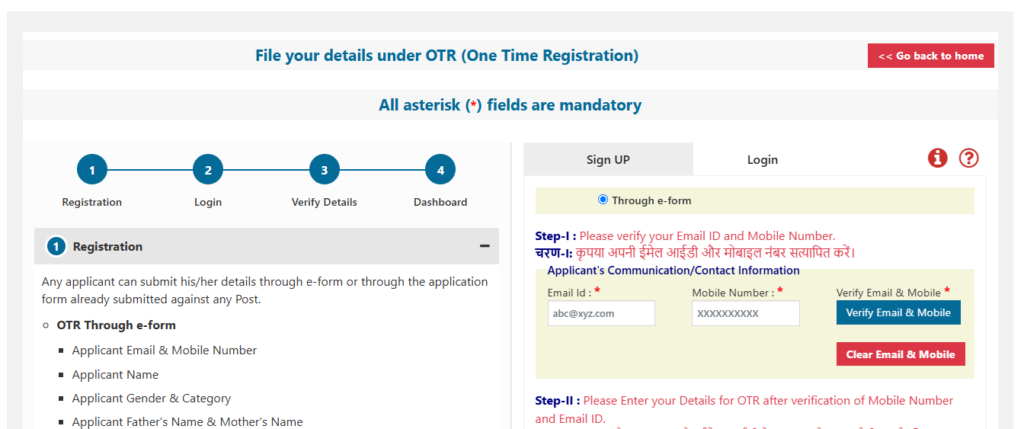
Candidates who have not registered must complete their One Time Registration and obtain an OTR number. The notification advises candidates to obtain the OTR number at least 72 hours before submitting the online application.
Step 2: Visit the UPPSC Website
Open the official website:
Go to the Notifications/Advertisements section and locate Advertisement No. A-5/E-1/2026 for Assistant Architect Planner Examination 2026.
Step 3: Authenticate Using OTR
Select the relevant examination and authenticate using your OTR number and the prescribed verification method.
Step 4: Complete the Application Form
Fill in the required information, including:
- Personal details.
- Educational qualifications.
- Architecture qualification details.
- Planning/Housing qualification or experience details.
- Category and reservation information.
- Other details required by the application portal.
Step 5: Pay the Application Fee
Pay the applicable examination and processing fee using the available online payment options.
Step 6: Submit the Application
Review the information entered in the application form. Submit the application and download or print the final application form for future reference.
Important: Candidates should retain the OTR details, payment receipt and final application printout. UPPSC may ask candidates to submit the hard copy of the application and self-attested certificates at a later stage.
UPPSC Assistant Architect Planner Recruitment 2026 Documents Required
Candidates should keep the following documents ready while completing the application:
- High School certificate or equivalent proof of date of birth.
- B.Arch. degree or recognised equivalent qualification certificate.
- Mark sheets of the required educational qualifications.
- Town Planning, Housing or related qualification certificates.
- Relevant experience certificates, wherever applicable.
- Category certificate for eligible reserved-category candidates.
- Uttar Pradesh domicile and other prescribed supporting documents, where required.
- PwD certificate, if claiming applicable benefits.
- Territorial Army service certificate or NCC ‘B’ Certificate, if claiming preference.
- Recent photograph and signature.
- OTR registration details.
The Commission may require self-attested copies of supporting documents during the verification process.
UPPSC Assistant Architect Planner Recruitment 2026 Notification PDF Download
Download the UPPSC Assistant Architect Planner Recruitment 2026 Notification PDF to check vacancy details, eligibility criteria, age limit, application dates, selection process, exam pattern, and important instructions.
UPPSC Assistant Architect Planner Important Dates 2026
| Event | Date |
|---|---|
| Official Notification Date | 4 November 2026 |
| Online Application Starts | 4 November 2026 |
| Last Date for Fee Payment | 4 December 2026 |
| Last Date for Online Application | 4 December 2026 |
| Correction / Modification Deadline | 11 December 2026 |
| Examination Date | To be announced by UPPSC |
The examination date and examination centre will be communicated separately through the Commission’s official website and e-Admit Card.
UPPSC Assistant Architect Planner Important Links
| Resource | Link |
|---|---|
| UPPSC Official Website | https://uppsc.up.nic.in/ |
| UPPSC OTR Registration Portal | https://otr.pariksha.nic.in/ |
| Online Application | Available through the UPPSC website |
| Official Advertisement | Advertisement No. A-5/E-1/2026 |
| Detailed Syllabus | Appendix-2 and Appendix-3 of the official notification |
Frequently Asked Questions (FAQs)
1. How many vacancies are available in UPPSC Assistant Architect Planner Recruitment 2026?
UPPSC has announced 8 vacancies for Assistant Architect Planner in the Uttar Pradesh Housing and Development Board. The category-wise distribution is 5 UR, 1 SC and 2 OBC vacancies.
2. What is the last date to apply for UPPSC Assistant Architect Planner 2026?
The last date for payment of the examination fee and submission of the online application is 4 December 2026.
3. What is the educational qualification required for Assistant Architect Planner?
Candidates must possess a recognised Bachelor’s Degree in Architecture or an equivalent qualification, along with one of the prescribed additional qualifications or experience routes in Town and Country Planning or Housing.
4. Is B.Arch. alone sufficient for UPPSC Assistant Architect Planner Recruitment?
No. The notification requires an Architecture qualification as well as an additional Planning/Housing qualification or the prescribed relevant experience. Candidates should check all three alternative routes under the educational qualification section.
5. Can a Bachelor of Planning graduate apply for Assistant Architect Planner?
A Bachelor of Planning or B.Tech in Planning may be recognised under Appendix-Q(i) with two years of Urban Planning experience in the specified government or local urban authority organisations. However, candidates must also meet the essential Architecture qualification requirement and the other conditions in the notification.
6. Is work experience compulsory for this recruitment?
Work experience is required under certain alternative qualification routes. For example, candidates using the three-year experience route must have the prescribed experience in Architecture, Town Planning or Housing. The one-year postgraduate diploma in Housing route also requires one year of relevant experience.
7. What is the age limit for UPPSC Assistant Architect Planner 2026?
The general age limit is 21 to 40 years as on 1 July 2026. Applicable age relaxation is available to eligible categories under Uttar Pradesh Government rules.
8. What is the salary of an Assistant Architect Planner in UPPSC?
The advertised pay scale is ₹15,600–₹39,100 with Grade Pay of ₹5,400, Pay Level 10.
9. What is the selection process for Assistant Architect Planner?
UPPSC will conduct a separate examination for Assistant Architect Planner. Selection will be based on the marks obtained in the examination, subject to eligibility and applicable recruitment rules.
10. Is there negative marking in the UPPSC Assistant Architect Planner Examination?
Yes. The notification specifies a deduction of one-third of the marks assigned to a question for an incorrect answer. Multiple answers marked for a question will also be treated as incorrect.
11. What is the minimum qualifying standard?
The prescribed minimum efficiency standard is 35% for SC/ST candidates and 40% for candidates belonging to other categories.
12. Where can candidates apply for UPPSC Assistant Architect Planner Recruitment 2026?
Candidates can apply through the official UPPSC website: https://uppsc.up.nic.in/. An OTR number is mandatory before submitting the online application.
13. What subjects are included in the Assistant Architect Planner syllabus?
The syllabus includes General Studies and Architecture & Planning. Major technical subjects include Architecture and Design, Building Construction, Structures, Urban Design, Landscape, Housing, Building Services, Sustainable Architecture, Planning Theory, GIS, Regional Planning, Transportation Planning and Environmental Planning.
14. When will the UPPSC Assistant Architect Planner examination be conducted?
The examination date has not been announced in the notification. UPPSC will communicate the date and examination centre separately through its website and e-Admit Card.
Conclusion
The UPPSC Assistant Architect Planner Recruitment 2026 is an important government job opportunity for eligible Architecture and Planning professionals seeking a position in the Uttar Pradesh Housing and Development Board.
With 8 advertised vacancies, a Group-B Non-Gazetted post, and a pay scale of ₹15,600–₹39,100 with Grade Pay ₹5,400, this recruitment is relevant to candidates who meet the prescribed Architecture and Town Planning/Housing qualification requirements.
Applicants should pay particular attention to the additional qualification and experience conditions, because a B.Arch. degree alone may not satisfy the complete eligibility criteria. Candidates should also study the official General Studies and Architecture & Planning syllabus and complete the OTR-based online application before 4 December 2026.